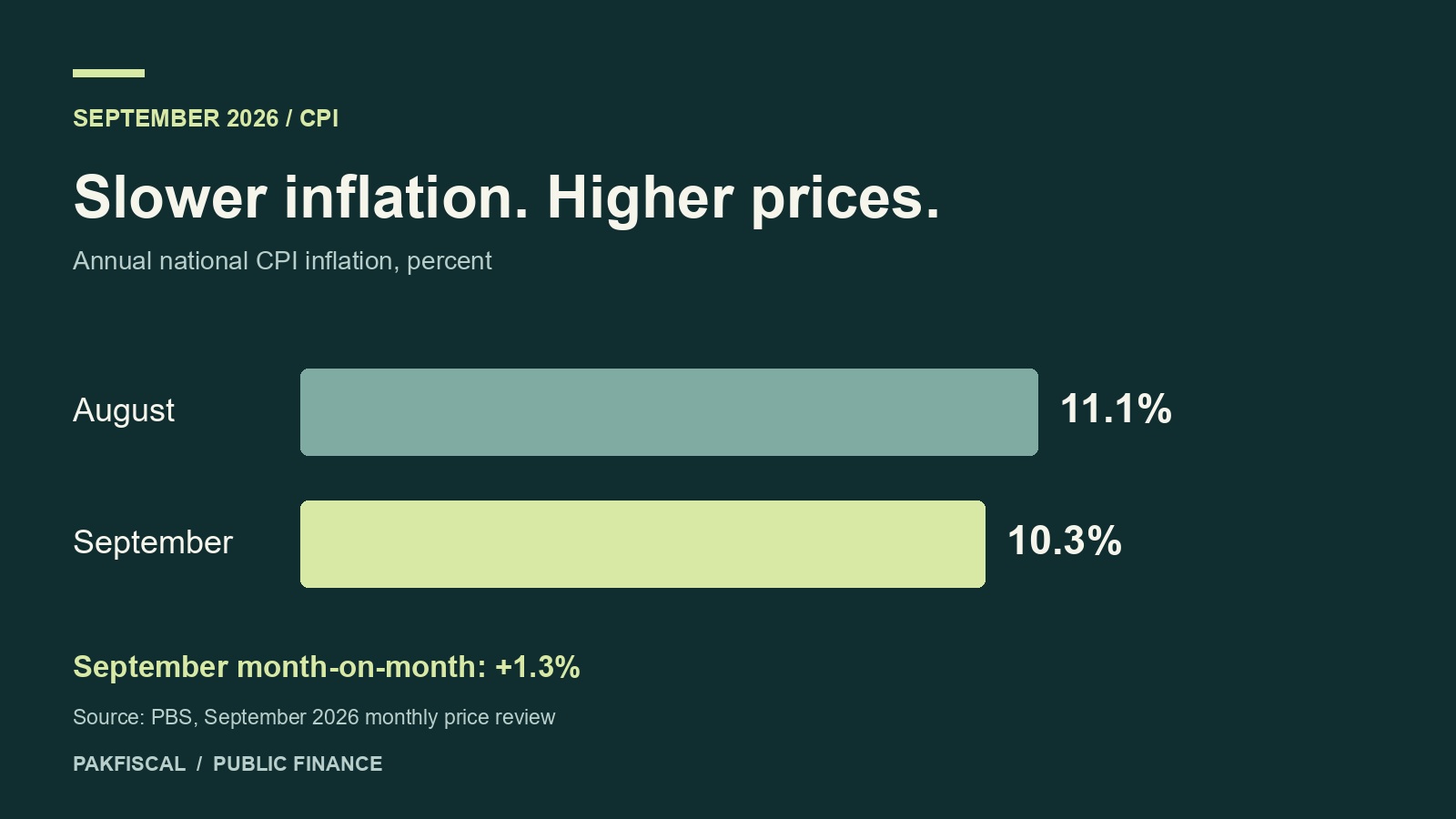
Pakistan’s September 2026 inflation reading is expected to fall between 10.25% and 10.75% year over year, according to a Topline Securities analyst forecast published on 27 September. This is an estimate, not the official Consumer Price Index result. The Pakistan Bureau of Statistics has released August’s CPI data; September’s figure is still pending.
PBS reported August inflation at 11.15% year over year, compared with 9.17% in July, according to its August CPI release. The September range would therefore suggest a slower annual rate than August, but a faster rate than July. It should not be read as a confirmed change in prices until PBS publishes its monthly report.
What the September inflation forecast says
The 10.25%–10.75% range is a private-sector projection, not an official government target or a statistical release. The forecast reflects analysts’ assessment of how the price index may have moved during September. The final result can differ because the CPI combines prices across a basket of goods and services, locations and household spending categories.
The comparison base also matters. Year-over-year inflation measures the cost of the CPI basket against the same month one year earlier. It does not mean that prices rose by 10.25% to 10.75% during September alone. Month-to-month inflation is a separate measure and can move differently.
Energy, food and housing costs remain the main risks
Analysts have pointed to petroleum and electricity prices, food, housing and construction costs as upside risks. These pressures can reach households directly through fuel, power and basic purchases. They can also affect business costs, transport charges and the price of building materials, although the impact varies across sectors and takes time to show up in the CPI.
For fiscal policy, persistent inflation can raise the cost of government purchases and put pressure on household support needs. For monetary policy, the relevant question is whether price increases are broad and lasting or concentrated in a few volatile categories. The forecast by itself cannot answer that; the official CPI breakdown will show more once it is published.
Reserves offer a separate external-sector signal
The State Bank of Pakistan held about $21.4 billion in foreign-exchange reserves on 18 September, according to its weekly reserves data. That is the SBP-held component, not total liquid reserves including commercial banks. The reserve figure gives a dated view of the central bank’s external buffer; it does not determine the month’s inflation reading.
Higher international oil prices can create pressure through the import bill and domestic fuel costs, while exchange-rate conditions also affect imported goods. Those are channels to monitor, not proof that a particular September price rise came from one source.
What to watch when PBS releases the CPI
The next useful check is PBS’s official September report: headline year-over-year inflation, the monthly change and movements in food, energy, housing and transport. Until then, 10.25%–10.75% should remain labelled as a forecast. PakFiscal will compare the released figure with the July and August readings and with the latest PBS price statistics. Readers can also follow PakFiscal’s budget analysis for the fiscal context around household and government costs.