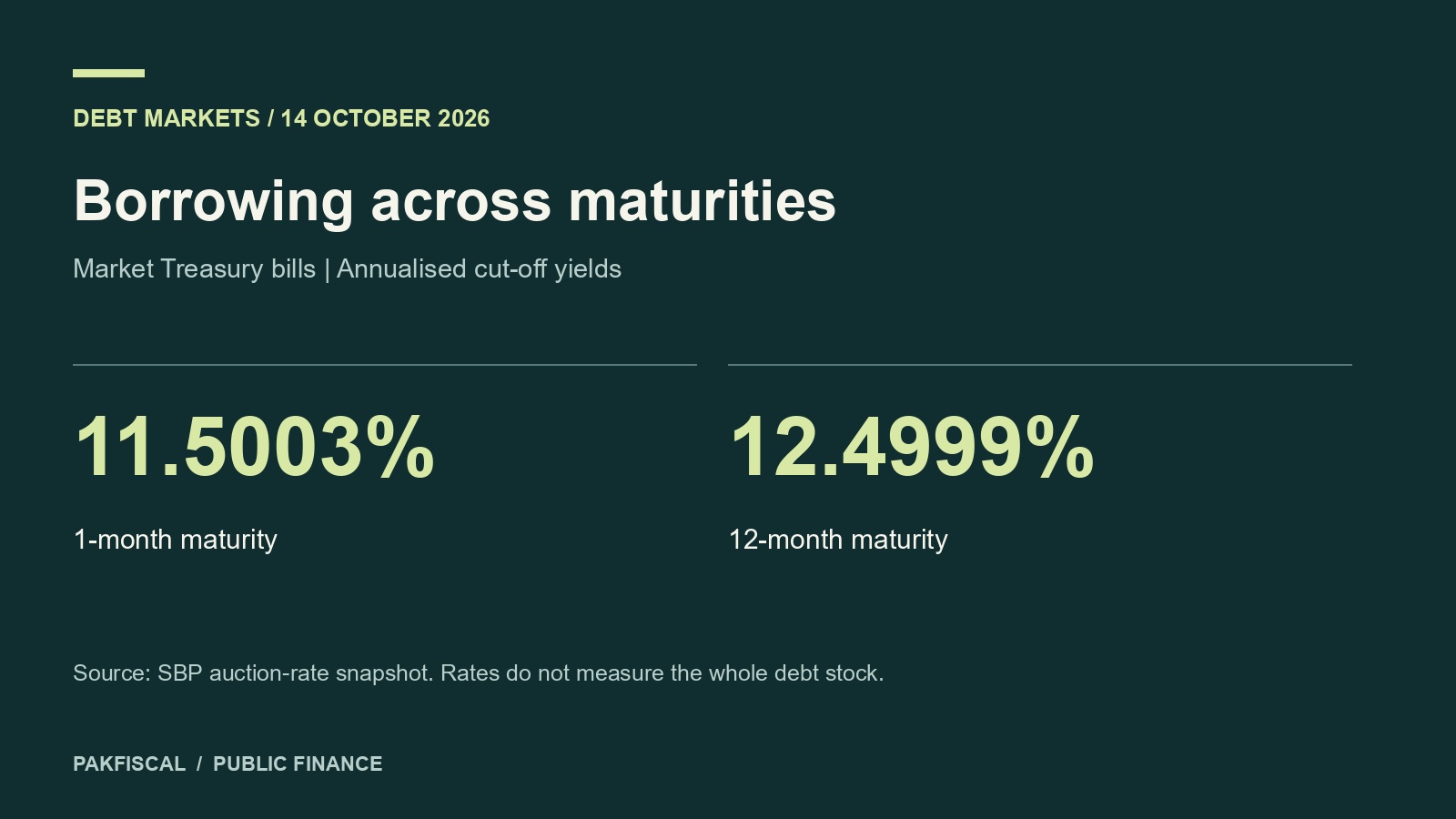
The State Bank of Pakistan’s auction-rate snapshot for 14 October 2026 shows Treasury bill cut-off yields rising across the listed maturities. The one-month figure is 11.5003 percent, compared with 12.4999 percent for 12 months. These are yields expressed on an annual basis.
| Maturity | Annualised cut-off yield |
|---|---|
| 1 month | 11.5003% |
| 3 months | 11.9999% |
| 6 months | 12.3989% |
| 12 months | 12.4999% |
A shorter maturity changes the risk as well as the price
A government choosing between maturities faces two linked decisions: the price of borrowing and the date at which it must refinance. A short bill comes due sooner. That can provide flexibility if future financing conditions improve, but it also brings the next refinancing decision closer.
A longer bill postpones that rollover point. The relevant trade-off cannot be judged from the lowest quoted yield alone. Cash availability, maturity concentrations and the risk of having to borrow again under less favourable conditions also matter. These are debt-management considerations, rather than a forecast that rates will move in a particular direction.
The cut-off is not the cost of the whole debt stock
An auction cut-off describes a marginal financing result for a particular instrument and maturity. It does not reprice every outstanding government obligation on the same day. Existing fixed-rate debt, maturing bills and instruments with resetting rates respond through different channels and at different times.
Nor should an annualised yield be read as the cash interest rate paid for a single month. Estimating the actual discount, proceeds or budget charge requires the instrument’s conventions, dates and accepted amount. The table is a comparison of published yields, not a calculation of total auction proceeds or national debt-service expense.
The fiscal question is the maturity mix
For budget analysis, the important follow-up is how much financing is raised at each maturity and which obligations it replaces. Reading the rate alongside the borrowing volume and repayment calendar gives a more useful picture of financing pressure than any isolated yield. This article makes no claim about a change from the previous auction.
Sources and reporting basis
SBP: Economic indicators, Market Treasury bill auction cut-off rates dated 14 October 2026
Official information checked on 18 October 2026. Interpretation is PakFiscal’s; reporting periods and policy targets are identified separately from publication dates.